Table of Contents
The England Cricket Team vs New Zealand National Cricket Team rivalry is one of the longest-running contests in international cricket. The two teams have shared a cricketing history for almost a century, beginning with New Zealand’s entry into Test cricket in the late 1920s.
Although England dominated many of the early encounters, New Zealand gradually developed into a highly competitive international side. From the first Test matches in 1930 to New Zealand’s historic victories in the 1970s and 1980s, the rivalry has continually evolved.
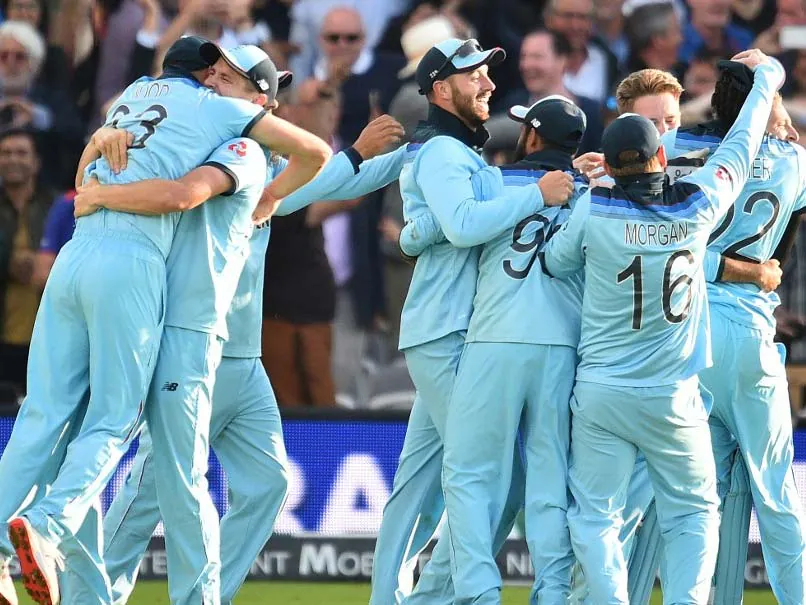
The modern era has produced some of the most dramatic matches between the two nations. The 2019 Cricket World Cup final, decided after a tied Super Over and a boundary-count tiebreaker, is perhaps the most famous example. The teams have also competed in major Test series, T20 internationals and other ICC tournaments.
In 2026, New Zealand added another important chapter by winning a three-Test series in England 2–1, including a 160-run victory at Trent Bridge in the deciding Test.
England vs New Zealand Cricket Timeline at a Glance
| Year | Major Event | Result/Significance |
|---|---|---|
| 1929–30 | First Test series | Beginning of official Test rivalry |
| 1931 | First Test at Lord’s | Match ended in a draw |
| 1949 | New Zealand tour of England | New Zealand completed an unbeaten Test tour |
| 1955 | New Zealand bowled out for 26 | Lowest Test innings total at the time |
| 1978 | New Zealand’s first Test win over England | Historic breakthrough |
| 1983 | New Zealand win at Headingley | First Test victory in England |
| 1984 | New Zealand win Test series | First series victory over England |
| 1986 | New Zealand win Test series in England | First series win in England |
| 1999 | New Zealand win at Lord’s | First New Zealand Test victory at Lord’s |
| 2015 | World Cup meeting | New Zealand win at Wellington |
| 2019 | World Cup final | England win after Super Over and boundary count |
| 2021 | World Test Championship Final | New Zealand defeat India; England rivalry continues separately |
| 2023 | ODI World Cup | New Zealand defeat England in opening match |
| 2024 | Test rivalry continues | England and New Zealand contest another Test series |
| 2026 | New Zealand tour of England | New Zealand win Test series 2–1 |
1929–1930: The Beginning of the Test Rivalry
New Zealand received Test status in the 1929–30 season and played its first Test series against England.
The first match took place in Christchurch in January 1930. New Zealand’s introduction to Test cricket was difficult, as England had much greater experience at the highest level.
England won several of the early encounters, and New Zealand had to wait decades for its first Test victory over England.
The early years nevertheless established a relationship that would become one of the most enduring in international cricket.
According to historical records, New Zealand played England in 19 of its first 22 Tests after gaining Test status.
Early Test Series
| Period | Development |
|---|---|
| 1929–30 | New Zealand enters Test cricket |
| 1930 | First Test series against England |
| 1931 | First Test between the teams at Lord’s |
| 1930s–1950s | England dominates most encounters |
| 1949 | New Zealand produces a strong unbeaten tour |
1931: First Test at Lord’s
The first England vs New Zealand Test at Lord’s took place in 1931.
New Zealand had only recently gained Test status, making the match an important milestone for the visitors.
The match ended in a draw after three days.
New Zealand batsman Stewie Dempster scored a century and became the first New Zealand player to have his name placed on the Lord’s Honours Board.
The result was significant because it showed that New Zealand could compete with England despite having relatively little Test experience.
1949: A Memorable New Zealand Tour
The 1949 New Zealand tour of England is regarded as one of the country’s most successful early tours.
New Zealand played four Tests against England, and all four ended in draws.
While New Zealand did not win a Test, the team completed the Test portion of the tour without defeat.
One of the highlights was Martin Donnelly’s 206 at Lord’s, an innings that became one of the most celebrated batting performances by a New Zealand player in England.
1949 Test Series
| Tests | New Zealand Wins | England Wins | Draws |
|---|---|---|---|
| 4 | 0 | 0 | 4 |
The tour gave New Zealand greater confidence and demonstrated that the team was becoming increasingly competitive.
1955: New Zealand’s Difficult Day at Eden Park
The rivalry also contains some remarkable low points.
In March 1955 at Eden Park, Auckland, New Zealand were dismissed for 26 runs against England.
The score remained the lowest completed innings total in Test cricket for many years and became one of the most famous statistics in New Zealand cricket history.
Despite these difficult moments, New Zealand continued developing its cricketing infrastructure and producing increasingly talented players.
1978: New Zealand Finally Defeat England
One of the biggest turning points came in February 1978.
After 47 unsuccessful attempts, New Zealand finally defeated England in a Test at Wellington’s Basin Reserve.
New Zealand needed only 137 runs to win, but England collapsed to 64 all out.
Fast bowler Richard Hadlee was the star of the match, taking 6 wickets for 26 runs.
New Zealand’s first Test victory over England was an enormous moment in the country’s cricket history.
1978 Milestone
| Achievement | Detail |
|---|---|
| Venue | Basin Reserve, Wellington |
| Result | New Zealand won |
| Margin | 72 runs |
| Key performer | Richard Hadlee |
| Significance | First New Zealand Test win over England |
1983: New Zealand Win in England
New Zealand’s progress continued in 1983.
The second Test at Headingley, Leeds, saw New Zealand defeat England.
Lance Cairns played a major role, taking 10 wickets in the match.
Although England eventually won the four-Test series 3–1, New Zealand had achieved another major milestone: its first Test victory in England.
This victory showed that New Zealand was no longer simply competitive at home. The team could also defeat England on English soil.
1984: New Zealand Win Their First Test Series Against England
A year later, New Zealand achieved another landmark.
In 1984, New Zealand defeated England in the second Test at Christchurch and won the two-match series 1–0.
Richard Hadlee produced an extraordinary all-round performance. He scored 99 and later took eight wickets for 44 runs.
New Zealand won the match by an innings and 132 runs.
1984 Series
| Test | Venue | Result |
|---|---|---|
| 1st | New Zealand | Draw |
| 2nd | Christchurch | New Zealand won |
| Series | — | New Zealand won 1–0 |
This was New Zealand’s first Test series victory over England.
1986: New Zealand Win a Test Series in England
The next major breakthrough came in 1986.
New Zealand toured England and won the second Test at Trent Bridge by eight wickets.
The victory gave New Zealand a 1–0 series win.
Once again, Richard Hadlee was central to the achievement, taking 10 wickets in the match.
This became New Zealand’s first Test series victory over England in England.
1990s: A More Competitive Rivalry
The 1990s saw both teams produce new generations of players.
England remained a powerful Test nation, but New Zealand became increasingly difficult to defeat.
Players such as Martin Crowe, Stephen Fleming, Chris Cairns and Nathan Astle helped New Zealand develop a stronger international identity.
England also produced players such as Graham Gooch, Alec Stewart, Michael Atherton and Nasser Hussain.
The rivalry became less one-sided than it had been during the early decades.
1999: New Zealand Win at Lord’s
Another historic moment arrived in 1999.
New Zealand defeated England at Lord’s for the first time.
It took New Zealand 13 attempts to achieve the victory at the famous London ground.
Chris Cairns took six wickets in England’s first innings, while Matt Horne scored a century for New Zealand.
New Zealand eventually won the Test by nine wickets and went on to win the four-Test series 2–1.
New Zealand’s Major Test Milestones in England
| Year | Achievement |
|---|---|
| 1983 | First Test win in England |
| 1986 | First Test series win in England |
| 1999 | First Test win at Lord’s |
2015: New Zealand and England in the Cricket World Cup
The rivalry entered another exciting phase with the rise of modern ODI cricket.
England and New Zealand met during the 2015 Cricket World Cup in Wellington.
New Zealand produced an outstanding bowling performance and won the match comfortably.
The match demonstrated the aggressive approach of Brendon McCullum’s New Zealand team.
New Zealand would eventually reach the World Cup final, where they lost to Australia.
2019: The Most Famous Match in the Rivalry
The 2019 Cricket World Cup final is arguably the most dramatic match ever played between England and New Zealand.
The final took place at Lord’s on 14 July 2019.
New Zealand batted first and scored 241 runs.
England also scored 241, meaning the match was tied after 50 overs.
For the first time in a men’s World Cup final, the match went to a Super Over.
2019 World Cup Final
| Category | Details |
|---|---|
| Venue | Lord’s, London |
| New Zealand | 241 |
| England | 241 |
| Super Over | Both teams scored 15 |
| Final result | England won on boundary count |
| Player of major impact | Ben Stokes |
| Significance | England’s first men’s ODI World Cup title |
The Super Over was also tied.
England were eventually declared winners because they had scored more boundaries during the match and Super Over under the tournament’s rules at the time.
The match became one of the most debated and memorable finals in cricket history. The International Cricket Council recorded England’s first men’s World Cup title following the extraordinary tied match and Super Over.
2021: Test Cricket and a New Generation
The rivalry continued into the early 2020s with both teams undergoing changes.
England developed a new approach to Test cricket under captain Ben Stokes and coach Brendon McCullum from 2022 onward.
New Zealand, meanwhile, continued to rely on players such as Kane Williamson, Tim Southee, Trent Boult and Tom Latham.
The two teams continued meeting in Test and limited-overs cricket, with their matches often featuring contrasting approaches.
England increasingly adopted an aggressive style of Test cricket, while New Zealand continued to combine disciplined bowling with adaptable batting.
2023: Another World Cup Meeting
England and New Zealand met in the opening match of the 2023 ODI World Cup in Ahmedabad.
New Zealand defeated the defending champions England by nine wickets.
The match was another reminder that the rivalry was not defined solely by the famous 2019 final.
New Zealand’s chase was led by Devon Conway and Rachin Ravindra, who both scored centuries.
2023 World Cup Opener
| Team | Score |
|---|---|
| England | 282/9 |
| New Zealand | 283/1 |
| Result | New Zealand won by 9 wickets |
| Venue | Ahmedabad |
2024: Continued Test Competition
England and New Zealand continued their Test rivalry in the 2020s.
The two sides remained closely matched in several individual contests, with experienced players and emerging talent appearing on both sides.
The rivalry also continued to benefit from players moving between domestic cricket competitions and learning each other’s conditions and styles.
New Zealand’s Test team retained its reputation for disciplined bowling, while England’s Test side under Stokes and McCullum continued to emphasize positive and aggressive cricket.
2026: New Zealand Win a Test Series in England
The latest major Test chapter came in 2026, when New Zealand toured England for a three-Test series.
England won the opening Test at Lord’s, but New Zealand responded strongly and eventually won the series 2–1.
The deciding Test at Trent Bridge ended with New Zealand winning by 160 runs.
2026 Test Series
| Test | Venue | Result |
|---|---|---|
| 1st Test | Lord’s | England won |
| 2nd Test | The Oval | New Zealand won |
| 3rd Test | Trent Bridge | New Zealand won |
| Series | England | New Zealand won 2–1 |
The 2026 series added another important milestone to New Zealand’s history against England.
England vs New Zealand Test Head-to-Head
The overall Test record shows England’s historical advantage, although New Zealand has made substantial progress over the decades.
As of 25 June 2026, the teams had played 118 Tests.
| Test Record | Matches |
|---|---|
| Total Tests | 118 |
| England wins | 55 |
| New Zealand wins | 16 |
| Draws | 47 |
| Ties | 0 |
These figures include the 2026 series and demonstrate how dramatically the rivalry has changed from the early decades.
Major England vs New Zealand Matches
| Year | Match/Event | Important Moment |
|---|---|---|
| 1931 | First Test at Lord’s | Match drawn |
| 1949 | England vs New Zealand Test series | Four draws |
| 1955 | Eden Park Test | New Zealand dismissed for 26 |
| 1978 | Basin Reserve Test | New Zealand’s first Test win over England |
| 1983 | Headingley Test | New Zealand’s first Test win in England |
| 1984 | Test series | New Zealand’s first series win |
| 1986 | England Test series | New Zealand’s first series win in England |
| 1999 | Lord’s Test | New Zealand’s first win at Lord’s |
| 2015 | World Cup | New Zealand defeat England |
| 2019 | World Cup final | England win after tied Super Over |
| 2023 | World Cup opener | New Zealand win by nine wickets |
| 2026 | Test series | New Zealand win 2–1 in England |
Greatest Players in the England vs New Zealand Rivalry
The rivalry has featured many outstanding players.
New Zealand Legends
| Player | Major Contribution |
|---|---|
| Richard Hadlee | World-class fast bowling and all-round performances |
| Martin Crowe | Elegant and technically strong batting |
| Stephen Fleming | Leadership and batting |
| Chris Cairns | All-round performances |
| Brendon McCullum | Aggressive batting and leadership |
| Kane Williamson | Elite Test batting and captaincy |
| Tim Southee | Fast bowling |
| Trent Boult | Left-arm pace bowling |
England Legends
| Player | Major Contribution |
|---|---|
| Ian Botham | All-round cricket |
| Graham Gooch | Opening batting |
| Alec Stewart | Wicketkeeping and batting |
| Michael Atherton | Test batting and leadership |
| Andrew Flintoff | All-round cricket |
| Joe Root | Test batting |
| Ben Stokes | All-round cricket and captaincy |
| James Anderson | Fast bowling |
| Stuart Broad | Fast bowling |
England vs New Zealand: Test Milestones
| Milestone | Year |
|---|---|
| First Test between the teams | 1930 |
| First Test at Lord’s | 1931 |
| New Zealand’s first Test win | 1978 |
| New Zealand’s first Test win in England | 1983 |
| First New Zealand Test series win | 1984 |
| First New Zealand Test series win in England | 1986 |
| First New Zealand win at Lord’s | 1999 |
| Famous World Cup final | 2019 |
| New Zealand win World Cup opener | 2023 |
| New Zealand win Test series in England | 2026 |
Why the England vs New Zealand Rivalry Is Special
The rivalry is unique because it has developed gradually rather than being dominated by one team throughout its entire history.
1. Almost a Century of Cricket
The two teams have been playing international cricket against each other since 1930.
2. New Zealand’s Long Journey
New Zealand went from struggling against England to recording historic Test victories, series wins and major tournament victories.
3. The 2019 World Cup Final
The tied final and Super Over created one of the most memorable matches in cricket history.
4. Great Players
Richard Hadlee, Martin Crowe, Kane Williamson, Joe Root, Ben Stokes and James Anderson are among the many stars associated with this rivalry.
5. Different Styles of Cricket
The rivalry has moved from traditional Test cricket to ODI cricket and modern T20 cricket, giving each generation its own memorable contests.
Conclusion
The England Cricket Team vs New Zealand National Cricket Team timeline is a story of transformation.
When New Zealand first entered Test cricket, England had a significant advantage. For decades, New Zealand struggled to record victories. However, the breakthrough finally came in 1978 when Richard Hadlee inspired New Zealand to its first Test victory over England.
The 1980s brought even greater success, including New Zealand’s first Test series victory and its first series victory in England. The 1999 victory at Lord’s was another historic milestone.
In limited-overs cricket, the rivalry reached a new level in the 21st century. New Zealand’s victories over England in World Cup cricket demonstrated the strength of their ODI side, while the 2019 World Cup final became an unforgettable part of cricket history.
The rivalry continued into the 2020s, with both nations producing new generations of players. New Zealand’s 2–1 Test series victory in England in 2026 added another significant chapter to the long-running contest.
From the first Tests of the 1930s to the extraordinary World Cup final of 2019 and the Test battles of 2026, England vs New Zealand remains a rivalry built on history, resilience, dramatic finishes and generations of exceptional cricketers.
Frequently Asked Questions
1. When did England and New Zealand first play a Test match?
England and New Zealand first played an official Test series in 1930, after New Zealand received Test status. Their first Test at Lord’s was played in 1931 and ended in a draw.
2. When did New Zealand first defeat England in a Test match?
New Zealand recorded its first Test victory over England in 1978 at the Basin Reserve in Wellington. Richard Hadlee played a major role in the historic win.
3. When did New Zealand first win a Test series against England?
New Zealand won its first Test series against England in 1984, winning the two-match series 1–0.
4. What happened in the 2019 England vs New Zealand World Cup final?
The 2019 World Cup final at Lord’s ended in a tie after both teams scored 241. The Super Over was also tied, and England were declared winners under the boundary-count rule in place at that time.
5. Who won the England vs New Zealand Test series in 2026?
New Zealand won the 2026 three-Test series in England 2–1. England won the first Test, but New Zealand won the next two, including the deciding Test at Trent Bridge.